 Image 1 of 2
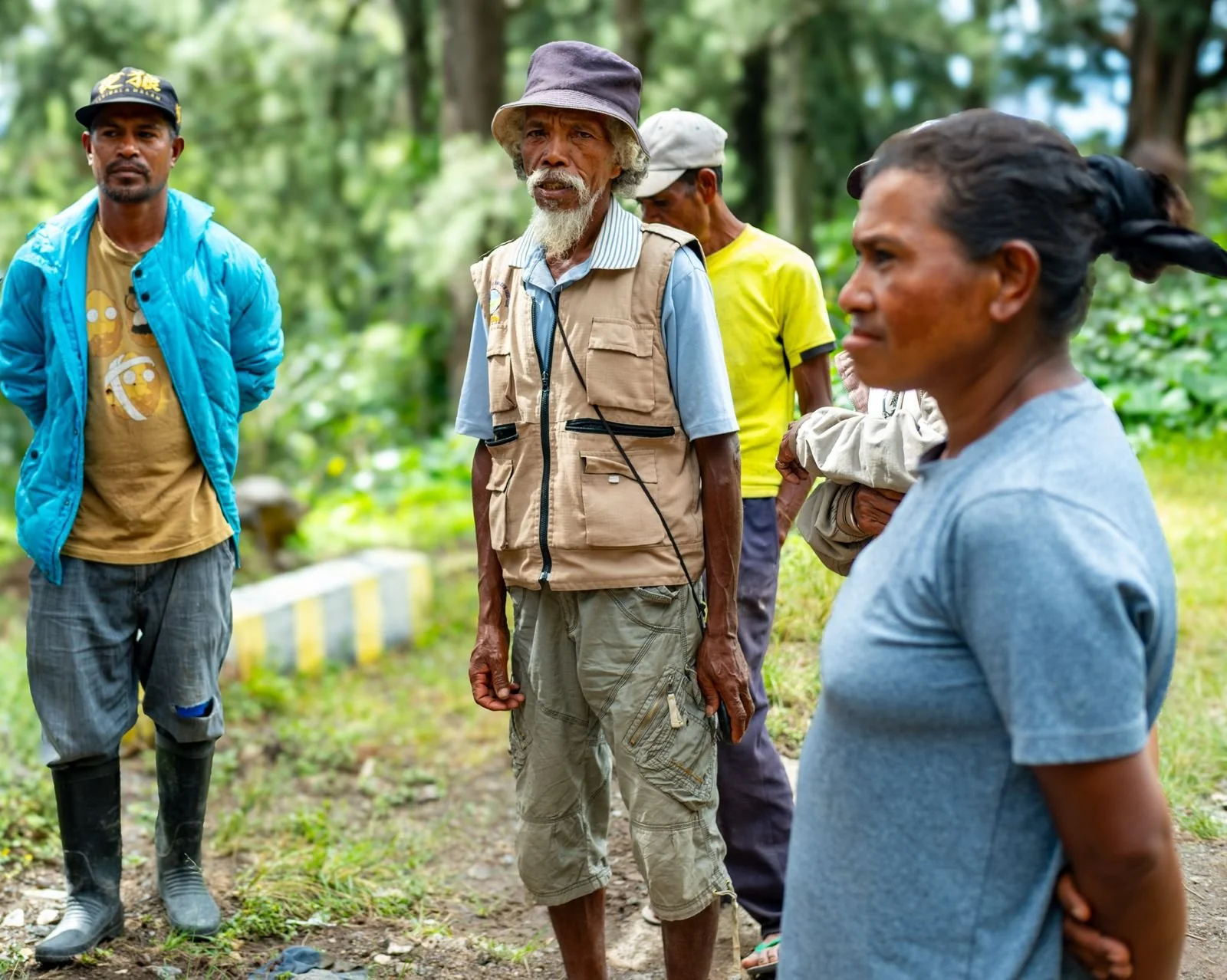 Image 2 of 2
Filter: Cherry · Berry · Creamy · Frangipani
Espresso: Berry · Mango · Crème Brûlée · Pretty
Varieties: Híbrido de Timor
Process: Controlled Natural
Region: Lequidoe, Alieu
Exporter/Importer: Orijem de Timor
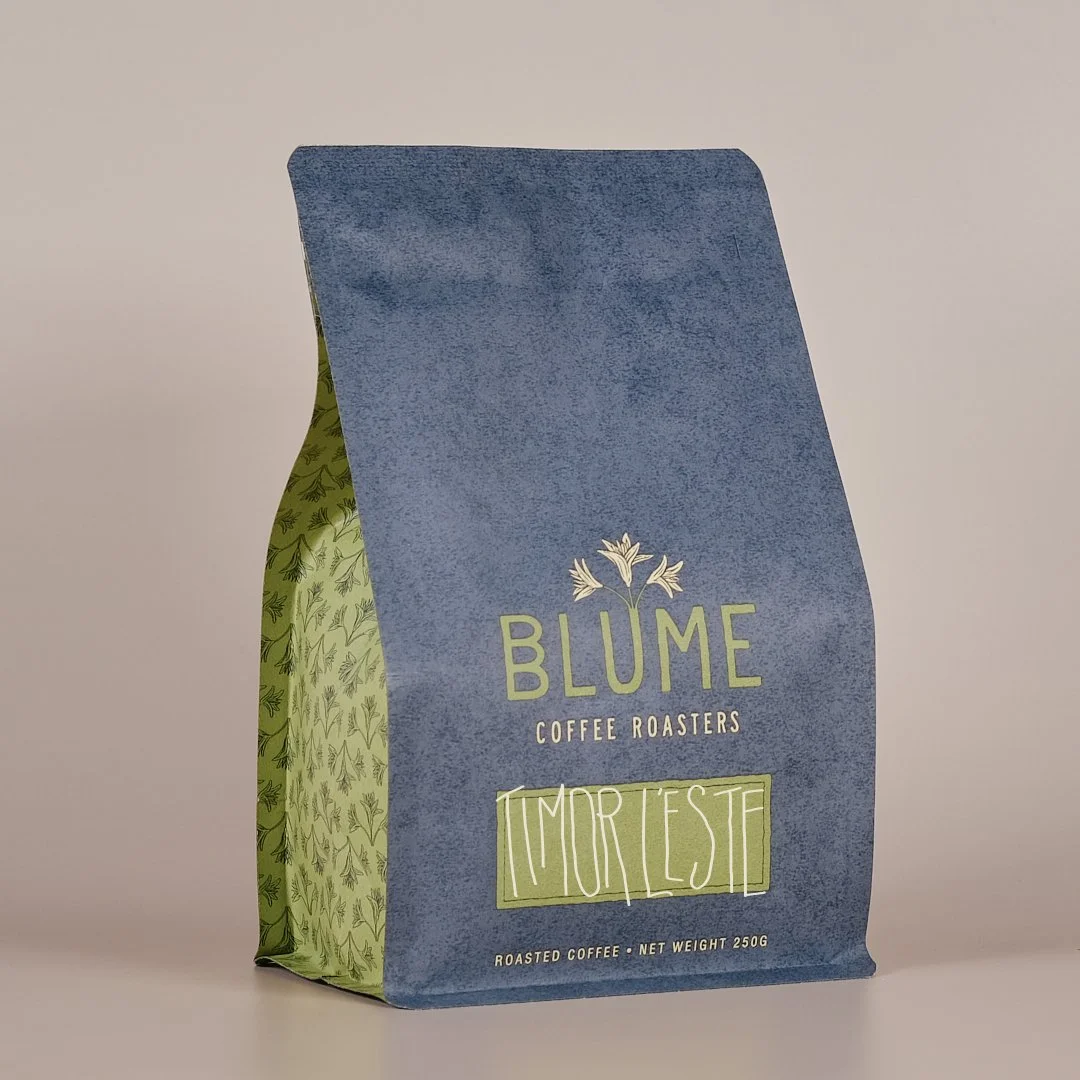
Our second lot, ever, from Timor-Leste; and we are seriously excited about this one. The first coffee we get to showcase from our new friends Gobie and Daniel with their team Estafania and Nina.
Together they run a producer collective, wet & dry mill, coffee lab and export company specialising in agricultural development, high-grade coffee production and boundary-pushing fermentation and processing. They call this Orijem Timor.
I first met Gobie two and a half years ago after scrawling my email on the back of a coffee bag that was being gifted to him by a friend, Luke. It's taken us a while but we are here and the coffees are stunning.
Timor-Leste is not just an incredibly beautiful place, our closest neighbour and one of the world's newest nations; it also boasts a genetically distinct, textbook impossibility of a coffee species that spontaneously appeared here early last century. Híbrido de Timor. A genetic hybrid of two species, Arabica and Robusta, it cannot be bred or cultivated in a lab or research garden. Exhibiting the high quality of Arabica as well as the disease and drought resistance of Robusta, it has been used the world over to fortify local varieties and stabilise global production.
A truly local species, with massive global influence. Talk about a coffee that speaks of place.
Now for how the fruit turned into a seed so we can roast it and you can brew it; what we call processing. What it actually is, is fermentation. Gobie happens to be an expert in this field having established the first distillery in Timor-Leste. This lot was fermented as whole red cherries in a precisely controlled and sterile environment, allowing the coffee to fully express itself whilst simultaneously eliminating the chance of taints that would lower the quality.
Detailed geek notes in the footer as Gobie graciously offered up an explanation of the entire process for us to share with you.
Híbrido grown in Alieu consistently expresses sweet fruit, deep sweetness and vibrant aromas. When processed in the hands of the team here, we find those fruits show up as complex cherries and berries, creamy sweetness, lifted florals of Frangipani and a sparkling acidity.
We LOVE this coffee and hope you will too.
The Fermentation:
Red coffee cherries (Híbrido de Timor) are harvested and floated to remove under-ripe and low-density beans, which taste sour and woody. Doing this in cold water helps to lower the temperature of the cherry, thereby slowing down any initial fermentation phases that are uncontrolled.
Cherries are placed in a food-grade tank, filled to about 75–80% of its volume. This prevents cherries at the bottom from rupturing under the weight of the coffee, creating off or funky flavours.
The tanks are sealed with an airlock to prevent the production of acetic acid, vinegar, (by excluding oxygen) and to encourage the production of lactic acid, creamy texture and sparkly acids, like a cola soda float.
The fermentation occurs due to various factors such as temperature, time, nutrients, and the presence or absence of oxygen. At our mill, we ferment in a sheltered and insulated space, which lowers ambient and fermentation temperatures to around 18–23 degrees Celsius. Cooler temperatures slow the rate of fermentation, allowing desirable flavour compounds to develop. Hot fermentation can be quicker but may produce sour, funky, or uncontrolled flavours.
Filter: Cherry · Berry · Creamy · Frangipani
Espresso: Berry · Mango · Crème Brûlée · Pretty
Varieties: Híbrido de Timor
Process: Controlled Natural
Region: Lequidoe, Alieu
Exporter/Importer: Orijem de Timor
Our second lot, ever, from Timor-Leste; and we are seriously excited about this one. The first coffee we get to showcase from our new friends Gobie and Daniel with their team Estafania and Nina.
Together they run a producer collective, wet & dry mill, coffee lab and export company specialising in agricultural development, high-grade coffee production and boundary-pushing fermentation and processing. They call this Orijem Timor.
I first met Gobie two and a half years ago after scrawling my email on the back of a coffee bag that was being gifted to him by a friend, Luke. It's taken us a while but we are here and the coffees are stunning.
Timor-Leste is not just an incredibly beautiful place, our closest neighbour and one of the world's newest nations; it also boasts a genetically distinct, textbook impossibility of a coffee species that spontaneously appeared here early last century. Híbrido de Timor. A genetic hybrid of two species, Arabica and Robusta, it cannot be bred or cultivated in a lab or research garden. Exhibiting the high quality of Arabica as well as the disease and drought resistance of Robusta, it has been used the world over to fortify local varieties and stabilise global production.
A truly local species, with massive global influence. Talk about a coffee that speaks of place.
Now for how the fruit turned into a seed so we can roast it and you can brew it; what we call processing. What it actually is, is fermentation. Gobie happens to be an expert in this field having established the first distillery in Timor-Leste. This lot was fermented as whole red cherries in a precisely controlled and sterile environment, allowing the coffee to fully express itself whilst simultaneously eliminating the chance of taints that would lower the quality.
Detailed geek notes in the footer as Gobie graciously offered up an explanation of the entire process for us to share with you.
Híbrido grown in Alieu consistently expresses sweet fruit, deep sweetness and vibrant aromas. When processed in the hands of the team here, we find those fruits show up as complex cherries and berries, creamy sweetness, lifted florals of Frangipani and a sparkling acidity.
We LOVE this coffee and hope you will too.
The Fermentation:
Red coffee cherries (Híbrido de Timor) are harvested and floated to remove under-ripe and low-density beans, which taste sour and woody. Doing this in cold water helps to lower the temperature of the cherry, thereby slowing down any initial fermentation phases that are uncontrolled.
Cherries are placed in a food-grade tank, filled to about 75–80% of its volume. This prevents cherries at the bottom from rupturing under the weight of the coffee, creating off or funky flavours.
The tanks are sealed with an airlock to prevent the production of acetic acid, vinegar, (by excluding oxygen) and to encourage the production of lactic acid, creamy texture and sparkly acids, like a cola soda float.
The fermentation occurs due to various factors such as temperature, time, nutrients, and the presence or absence of oxygen. At our mill, we ferment in a sheltered and insulated space, which lowers ambient and fermentation temperatures to around 18–23 degrees Celsius. Cooler temperatures slow the rate of fermentation, allowing desirable flavour compounds to develop. Hot fermentation can be quicker but may produce sour, funky, or uncontrolled flavours.